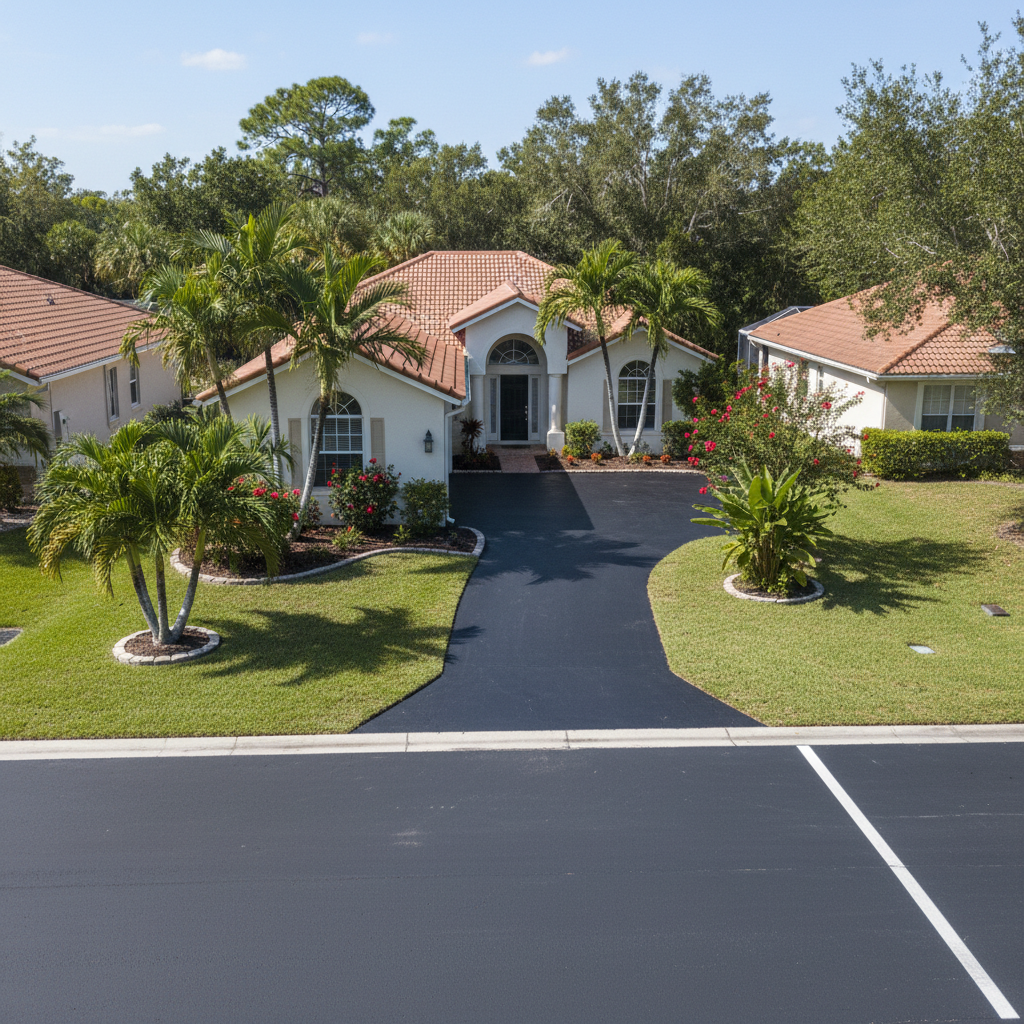
When's the last time you really looked at your asphalt driveway or parking lot? I mean, truly looked at it, beyond just noticing if it's clean or dirty. If you're seeing it fade from black to gray, or if those tiny hairline cracks are starting to spiderweb across the surface, your pavement is screaming for some protection. And in Sunrise, FL, that protection often means sealcoating.
Why Sealcoating Is a Must-Do in South Florida
Down here, our asphalt takes a beating like almost nowhere else. It's not just the cars driving over it; it's the constant, relentless sun, the sudden downpours, and the humidity that just never quits. I've seen countless driveways in neighborhoods like New River Estates or the older sections near Nob Hill that just bake all day, every day. That sun, especially our intense UV rays, is a killer for asphalt. It dries out the binders, makes the surface brittle, and turns that rich black color into a dull, worn-out gray.
Then you've got the rain. We get some serious tropical deluges, don't we? Water is asphalt's enemy number one. It seeps into those tiny cracks, and when it sits there, it starts to break down the base layer. If those cracks aren't sealed, that water just keeps working its way deeper, leading to potholes and bigger, more expensive problems down the line. Sealcoating puts a protective barrier over your asphalt; it's essentially giving it a fresh, new skin.
What Does Sealcoating Actually Do?
Think of sealcoating like sunscreen and a rain jacket for your pavement. It's a liquid application, usually a coal tar or asphalt emulsion, that gets put right on top of your existing asphalt. Once it cures, it does a few really important things:
- Blocks UV Rays: It acts like a shield against the sun, stopping the asphalt from oxidizing and drying out. This keeps it flexible and makes it last longer.
- Repels Water: It fills those tiny surface voids and hairline cracks, making the pavement less permeable. Water beads up and runs off, instead of soaking in and causing damage.
- Restores Appearance: It brings back that deep, rich black color, which makes your property look a whole lot better. A well-maintained parking lot or driveway just screams professionalism and care, doesn't it?
- Resists Chemicals: Oil drips, gas spills, and other automotive fluids can eat away at unprotected asphalt. Sealcoat provides a barrier against these corrosive substances.
- Extends Pavement Life: By protecting against the elements and everyday wear, sealcoating can significantly prolong the life of your asphalt, delaying the need for costly repairs or full repaving.
I tell folks it's one of the most cost-effective maintenance steps you can take. A little bit of prevention goes a long, long way, especially with the price of asphalt materials these days.
When Should You Sealcoat in Sunrise?
This is where local knowledge really comes into play. You can't just sealcoat whenever you feel like it. The weather has to cooperate. We need warm, dry conditions for the sealcoat to cure properly. That means avoiding our rainy season if possible, or at least picking a solid stretch of dry days. Humidity also plays a role; too much moisture in the air can affect the curing process.
Generally, I recommend sealcoating every 2-3 years for residential driveways, and maybe every 1-2 years for commercial parking lots with heavier traffic. But it really depends on the specific conditions – how much sun exposure it gets, how much traffic, and how well it was installed in the first place.
For commercial properties, especially those with heavy truck traffic or lots of turning vehicles, you might see wear patterns develop faster. Think about the loading docks or delivery areas behind businesses off University Drive; those spots take a beating. Regular inspections are key to catching issues early.
Why Local Expertise Matters for Sealcoating
You might think sealcoating is a simple job, but there's an art and a science to doing it right, especially here in South Florida. A crew that's used to working in colder climates might not understand how quickly the product dries in our heat, or how to properly prep a surface that's been baked by the sun for years.
We know the soil conditions here – often sandy and prone to shifting – and how that can impact the asphalt's foundation. We understand the specific challenges of our tropical climate. When you hire a local company like All Star Asphalt, you're not just getting someone to spray a product; you're getting decades of experience dealing with exactly these conditions, right here in your backyard.
We'll properly clean the surface, address any existing cracks before applying the sealcoat, and use the right mix for our climate. Skipping these steps, or using an inferior product, means you're just throwing money away. You want a sealcoat that's going to last and do its job, not one that's going to peel or wear off in six months.
So, take a good look at your asphalt. If it's showing signs of wear, don't wait until it's a major repair job. A timely sealcoating can save you a lot of headaches and money down the road. It's a smart investment in your property's longevity and curb appeal.