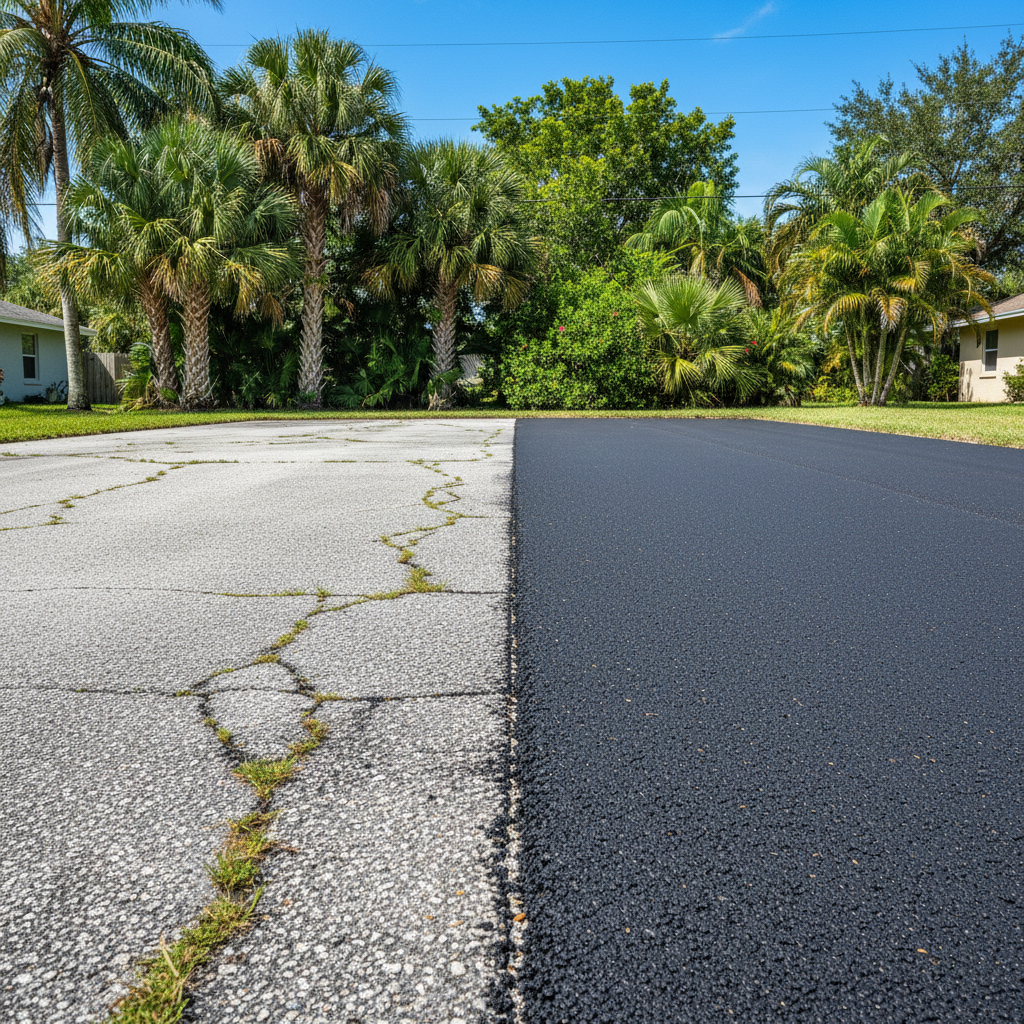
Your community's roads or parking lots are looking rough, right? Cracks, potholes, maybe even some alligator cracking that's got you worried. So, what's the fix? Usually, it comes down to two main options: an asphalt overlay or a full-depth replacement. As a local contractor, I've seen both done right and, frankly, done wrong. Let's talk about what each means for your property here in Sunrise.
Asphalt Overlay: The Quick Fix (Sometimes)
An asphalt overlay is basically putting a new layer of asphalt right on top of your existing, but still structurally sound, pavement. Think of it like a fresh coat of paint, but for your road. We'll clean the surface, fill any major cracks or potholes, and then lay down a new layer of hot asphalt, usually 1.5 to 2 inches thick.
When an Overlay Makes Sense:
- Cost: It's almost always cheaper upfront than a full replacement. You're using less material, and there's less demolition involved.
- Speed: We can get the job done quicker. Less disruption for residents or customers, which is a big deal for HOAs and businesses.
- Appearance: You get a smooth, fresh surface that looks great. It's a real aesthetic upgrade.
The Catch with Overlays:
Here's the thing: an overlay only works if the underlying pavement is in decent shape. If you've got extensive structural damage – deep, widespread cracking, significant rutting, or areas that are literally crumbling – an overlay is just putting a band-aid on a broken bone. Those underlying problems will eventually telegraph through the new layer. I've seen it happen too many times, especially in places like the older sections of Springtree or Lauderhill, where the original base might be worn out.
Another thing to consider is drainage. Adding an inch or two of asphalt changes the elevation, doesn't it? We have to make sure water will still drain properly, especially with our heavy rainy seasons. You don't want new puddles forming because the grade got messed up.
Full-Depth Replacement: The Long-Term Solution
This is exactly what it sounds like: we rip out all the old asphalt, down to the sub-base, and then rebuild from the ground up. This involves excavating the old material, checking and often repairing or reinforcing the sub-base (the dirt and rock underneath), and then laying down new asphalt in multiple layers.
When a Full Replacement is Necessary:
- Severe Damage: If the pavement is failing structurally – widespread alligator cracking, potholes that keep coming back, significant heaving, or a soft, spongy feel – you need a full replacement. The base is compromised.
- Longevity: A properly done full-depth replacement will last significantly longer than an overlay, often 20 years or more with good maintenance. You're essentially getting a brand-new road or parking lot.
- Drainage Issues: If your current pavement has major drainage problems, a full replacement allows us to re-grade the entire area to ensure proper water flow. This is crucial in South Florida where we get so much rain.
The Downsides of Full Replacement:
- Cost: It's more expensive, no two ways about it. More labor, more material, more demolition, more hauling away of debris.
- Time & Disruption: It takes longer. There's more noise, more heavy equipment, and larger sections of the property might be inaccessible for longer periods.
So, What's Right for Your Sunrise Property?
Honestly, it boils down to the condition of your existing pavement's foundation. If the structural integrity is mostly there, and you're just dealing with surface wear and tear, an overlay can be a cost-effective way to extend its life and improve its appearance for another 7-10 years. You still need to do proper crack filling and sealcoating to get that lifespan, though.
But if the damage goes deep, if you've got areas where the asphalt is literally crumbling or sinking, or if you're constantly patching the same spots, an overlay is just throwing money away. You'll be back to square one, or worse, in a couple of years. In those cases, a full-depth replacement is the only smart long-term investment.
Here in Sunrise, especially with our sandy soil conditions and heavy rainfall, the sub-base is critical. If that's not stable, nothing you put on top will last. I always recommend getting an experienced contractor to evaluate the pavement. We can assess the extent of the damage, sometimes even doing core samples to see what's happening underneath. Don't just go by what it looks like on the surface.
At All Star Asphalt, we'll give you an honest assessment of your pavement's condition and recommend the solution that makes the most sense for your budget and long-term goals. We're not going to push you into a full replacement if an overlay will genuinely do the trick, and we certainly won't recommend an overlay if it's just going to fail on you quickly. It's about doing the job right the first time, so you don't have to worry about it for years to come.